AI Rap Generator Prompt Pack: 25 Hooks, Flows & Rhymes
MuseGen Team
5/11/2026
Staring at an empty page is a special kind of quiet. You've got a vibe, maybe even a beat, but the first hook won't land - and every line feels like a placeholder. I've been there, and the fastest way I've found to break the block is treating an ai rap generator like a co-writer: you give tight constraints, it gives options. This how-to guide shows you a repeatable workflow plus a copy-paste ai rap generator prompt pack for hooks, flows, and rhyme schemes you can actually perform.
What an AI rap generator does (and what it doesn't)
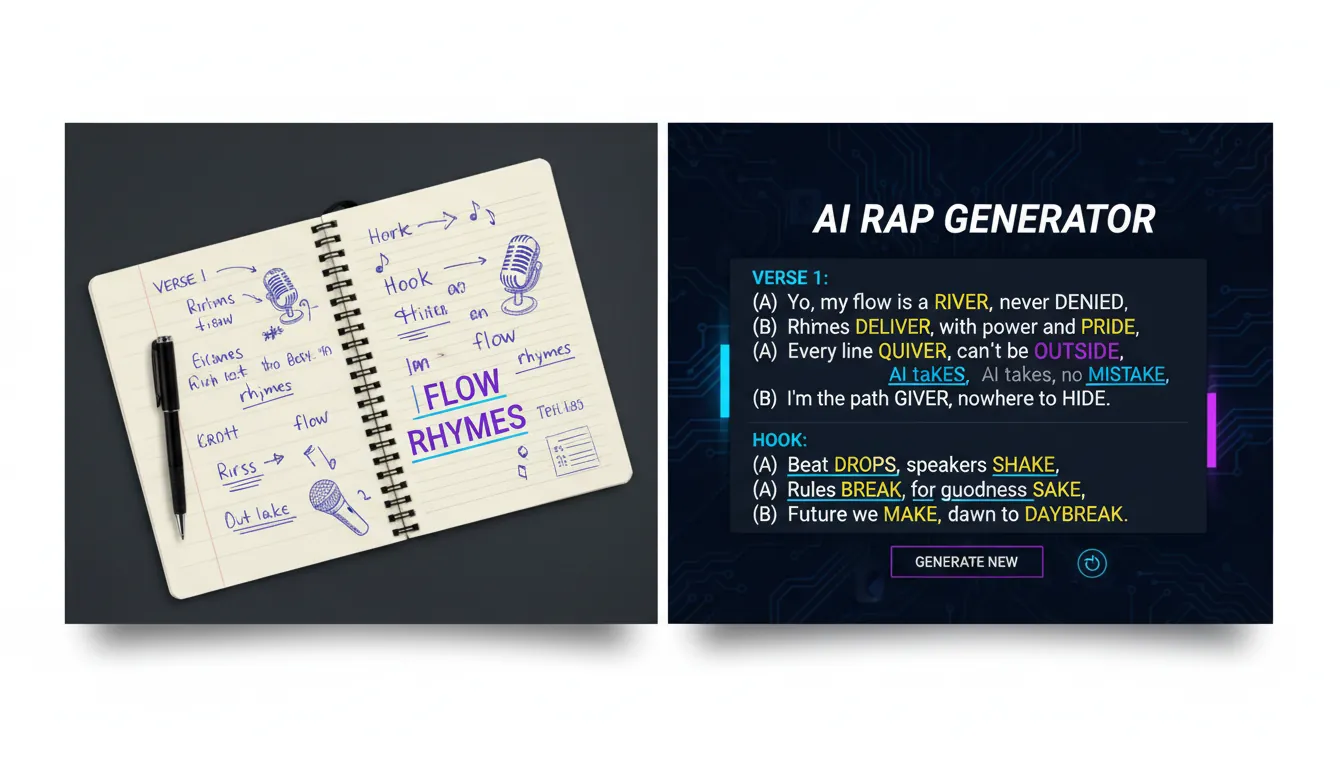
An ai rap generator turns your direction - topic, mood, cadence, rhyme scheme, structure - into draft lyrics (and in some tools, beats and vocals too). The good ones don't just rhyme end words; they aim for coherence, cadence, and patterns like ABAB or internal multisyllabic rhymes, which is why specificity matters. In practice, I use an ai rap generator for volume: generate 5-10 variants, then curate the best 10% and rewrite the rest in my voice. It's not authenticity in a box; it's a faster starting line.
If you want to go beyond lyrics into full demos, the MuseGen workflow is built for it: text-to-music, stem exporting (WAV/MIDI), and quick iteration inside a browser-based studio (MuseGen AI Music Generator, AI Vocal & Lyrics Generator, One-Click MV Generator).
Rapping, deconstructed: The best rhymers of all time
How to use an AI rap generator: the 7-step workflow (repeatable)
1) Lock the "scene," not the theme
Vague themes ("success," "freedom") tend to produce generic bars. Pick a moment with conflict.
- Better: "Late-night drive home after quitting a job I hated - scared and free."
- Add sensory anchors: location, time, weather, one object, one emotion shift.
2) Choose your structure before you write
Your structure tells the ai rap generator what "done" looks like.
- Hook: 4-8 bars, repeatable, simple vowels, strong last words
- Verse: 16 bars (or 12), more detail, more internal rhymes
- Bridge/outro: optional, contrast or summary
3) Specify rhyme scheme + rhyme density
Ask for one of these explicitly:
- AABB (couplets): punchy, direct
- ABAB (alternate): more musical, keeps attention
- Internal multis: technical feel, faster replay value
- Slant rhymes: modern, less "nursery-rhyme"
4) Define flow like a producer would
Flow is "delivery instructions." Include:
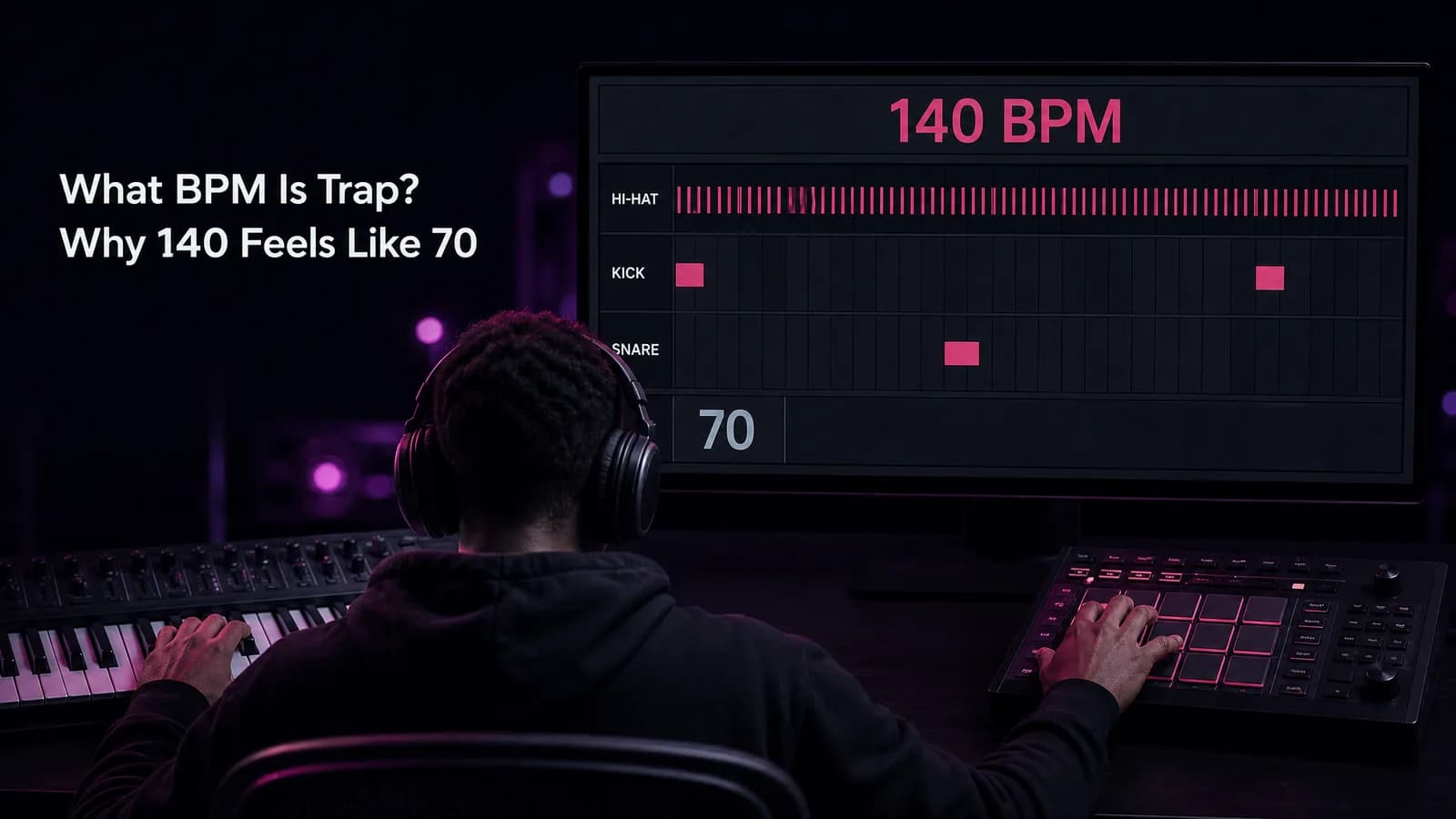
- BPM range (or "half-time pocket")
- Syllables per bar (rough target)
- Cadence style: laid-back, chopper, melodic rap, drill urgency
5) Add persona + point of view (POV)
A persona makes the output sound intentional.
- POV: first person ("I"), second person ("you"), or narrator
- Persona: "sleep-deprived founder," "underground battle MC," "optimistic underdog"
6) Generate in batches, then judge like an editor
My rule: don't edit the first output - generate 3-6 versions first. Keep:
- 1-2 killer couplets
- 1 sticky hook phrase
- 1 metaphor chain worth expanding
7) Finalize: performability check
Before recording, read it out loud on a loop.
- Mark breaths with "/"
- Replace tongue-twisters unless you want that effect
- Make sure punchlines land on bar ends (or intentionally before)
Prompt pack: 25 AI rap generator prompts (hooks, flows, rhymes)
Use these as copy/paste templates. Replace anything in [brackets]. Each prompt is designed to push an ai rap generator toward coherent structure, real cadence, and usable rhyme patterns.
A) 10 Hook prompts (catchy, repeatable, brandable)
- 4-bar earworm (anthem)
"Generate only a 4-bar hook about [topic]. Make it chantable, grade-school simple words, strong end rhymes, and a phrase that can repeat twice. Mood: [confident/uplifting]." - 8-bar hook with call-and-response
"Write an 8-bar hook with call-and-response (main line + echo line). Topic: [topic]. Rhyme scheme: AABB. Keep each bar under 10 syllables." - Melodic rap hook
"Create a 6-bar melodic rap hook about [topic]. Use open vowels (ah/oh) and slant rhymes. Leave space for ad-libs in parentheses." - Dark drill hook
"Write a 4-bar drill hook about [topic]. Tone: cold, minimal. Use internal rhymes and hard consonants. No comedy." - Story-hook (teaser)
"Generate a 4-bar hook that teases a story: [specific moment]. End every line with a different rhyme family but keep the same cadence." - Brand/slogan hook
"Write a hook that sounds like a slogan for [channel/brand] without naming competitors. 4 bars. Make it meme-ready but not corny." - Pain-to-power hook
"Create an 8-bar hook that flips from regret to resolve. Topic: [topic]. Use ABAB rhyme scheme and one repeated keyword: [word]." - Club-ready hook
"Write a 4-bar hook for a club rap track. Include one short command line (2-4 words). Keep it clean (no profanity)." - Lo-fi reflective hook
"Generate a 6-bar hook about [topic] in a lo-fi, late-night tone. Use soft slant rhymes and imagery (streetlights, rain, screens)." - Battle-style hook (boast)
"Write a 4-bar hook that's pure confidence. Use multisyllabic end rhymes and one internal rhyme per line."
B) 10 Verse/flow prompts (cadence-first, performance-ready)
- 16 bars trap (tight couplets)
"Write a 16-bar trap verse about [topic]. Tone: aggressive and focused. Rhyme scheme: AABB. Include internal rhymes and 2 extended metaphors." - Boom bap storytelling
"Write a 16-bar boom bap verse telling a story: [scene + conflict + resolution]. Add one clever punchline every 4 bars. Keep language vivid, not abstract." - Chopper flow with breath marks
"Create a 12-bar fast flow verse. Add / where breaths go. Use short words, strong alliteration, and internal multis. Topic: [topic]." - Half-time pocket (double-time feel)
"Write 16 bars that feel double-time over a half-time beat. Keep end rhymes consistent for 8 bars, then switch rhyme family for the next 8." - Drill cadence + ad-libs
"Write 12 bars in drill cadence, sparse but sharp. Add ad-libs in parentheses every 2-3 lines. Topic: [topic]. Avoid naming real artists." - Conscious rap (argument)
"Write a 16-bar verse that makes an argument about [issue]. Use ABAB rhyme scheme, one rhetorical question, and one 2-bar summary at the end." - Motivation verse (gym/discipline)
"Write 16 bars about discipline: alarms, reps, routines. Use consistent cadence and end-stopped punchlines. No cliches like 'rise and grind.'" - Comedy verse (clean)
"Write 12 bars, clean humor, about [awkward situation]. Use unexpected comparisons, not insult comedy. Rhyme scheme AABB." - Persona swap verse
"Write a verse from the POV of [persona] (first person). Topic: [topic]. Include 3 specific details only that persona would mention." - Minimalist rhyme (modern)
"Write 16 bars with loose slant rhymes, minimal words, lots of space. Each bar max 7 words. Mood: [detached/calm]."
C) 5 Rhyme-tool prompts (multis, internals, schemes on demand)
-
Multisyllabic rhyme bank
"Give me 20 multisyllabic rhyme pairs for [keyword]. Include near-rhymes and indicate stress pattern (e.g., DA-da-DA)." -
Internal rhyme rebuild
"Rewrite these 4 lines to add internal rhymes while keeping meaning:- [line]
- [line]
- [line]
- [line]"
-
ABAB conversion
"Convert this 8-bar section into ABAB rhyme scheme without changing the topic: [paste lyrics]. Keep cadence similar." -
Punchline generator (every 2 bars)
"Write 16 bars on [topic] and ensure there's a punchline every 2 bars. Highlight punchlines in bold." -
Hook variants (A/B testing)
"Generate 5 different 4-bar hooks for [topic]. Version 1: confident. Version 2: dark. Version 3: funny. Version 4: melodic. Version 5: minimalist."
Quick comparison: lyrics-only vs full-track AI rap generator tools
Use this to decide whether you need just words or a full demo (lyrics + beat + vocal).
| Option type | Best for | Output | Pros | Trade-offs |
|---|---|---|---|---|
| Lyrics-only AI rap generator | Writers, ideation, writer's block | Hooks/verses/structures | Fast iteration, easy copy/paste, great for prompt practice | You still need beats, delivery, recording |
| Full-track AI rap generator | Creators needing demos fast | Lyrics + beat + (sometimes) vocals | One workflow, shareable drafts, quicker content turnaround | Requires stronger direction to avoid generic sound |
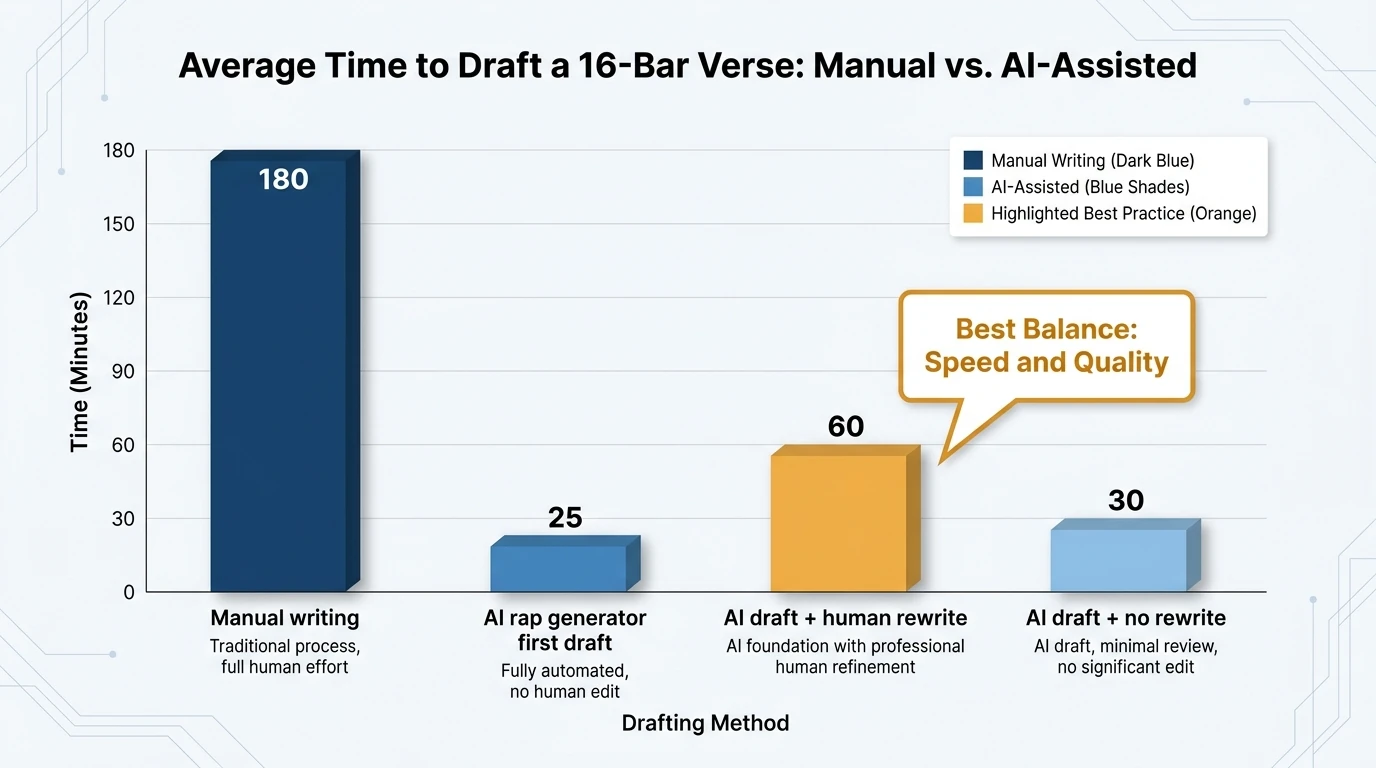
| Hybrid workflow (recommended) | Producers + artists | AI draft -> human rewrite -> production | Best balance of speed + originality; your voice stays central | Requires editing time and taste |
For prompt-driven lyric drafting, you can study how specialized tools frame cadence and rhyme requests (e.g., Neume's rap lyrics generator overview). For broader tool comparisons and full-song creation context, see platform roundups like Suno's AI rap lyrics generator hub.
MuseGen how-to: turn prompts into a studio-ready rap demo
If your goal is a shareable draft (not just text), a tight workflow matters more than "one perfect prompt." Here's how I'd run it in MuseGen as an AI music generator platform.
1) Start with the beat direction (even if you're lyric-first)
In your music prompt, specify:
- Subgenre + drum architecture: boom bap swing, trap hats, drill slides
- BPM range and mood
- Instrument palette (dark piano, soul sample, airy pads)
Then generate 2-4 candidates and pick the pocket that matches your intended cadence.
2) Generate lyrics with structure labels
Paste one of the prompts above and require:
- "Label sections: [Hook] [Verse 1] [Hook] [Verse 2]"
- "Keep Verse 1 exactly 16 bars"
3) Add vocal direction (if using AI vocals)
Tell the system:
- Voice energy: calm / urgent / aggressive
- Enunciation: crisp vs slurred
- Space for ad-libs
4) Export stems and polish like a real session
If you're producing, exporting WAV stems and MIDI is where "AI draft" becomes "release-ready."
- Tighten drums, rebalance 808, add ear-candy
- Manually rewrite 10-30% of bars to lock your identity
- Quick master for loudness consistency
Legal + copyright reality check (plain English)
People ask if AI-generated music is illegal. Using an ai rap generator is not inherently illegal, but the rights depend on what you generated, how the tool was trained/licensed, and how much human authorship is present. In the U.S., copyright protection generally requires human creative contribution; prompts alone may not qualify as authorship in many situations, and the safest approach is to treat AI output as a draft you substantially transform. For sampling: there is no "15-second" or "2-second" rule that makes copyrighted use automatically safe - licenses are what matter.
For deeper reading, start here:
- AI in Lyric Writing: ethical and legal considerations
- AI music copyright legal risks creators must know
- The New Songwriters: AI, Music and the Law
Practical habit I use: keep a dated doc of your edits (what you changed and why). It helps you prove human selection, coordination, and rewriting if questions come up later.
Common mistakes that make AI rap sound "AI"
- Overprompting with vibes, underprompting with structure (no bar count, no scheme, no cadence)
- No concrete scene (results drift into generic "grind" lines)
- Copy-pasting without rewriting (your unique phrasing is the differentiator)
- Ignoring performability (great on screen, awkward on breath)
- Accidentally cloning (don't prompt for exact living-artist imitation; aim for technique descriptors instead)
FAQ: AI rap generator questions people actually search
1) Is AI-generated music illegal?
Usually no, but legality depends on the tool's terms, training/licensing posture, and whether you're infringing someone else's copyrighted work (like sampling or writing that's too derivative). Read the platform license and avoid using protected material without permission.
2) How do I create an AI rapper?
Define a persona (voice, POV, vocabulary, values), then consistently prompt for that persona's behaviors: cadence, ad-libs, slang level, and topics. Save a "persona card" and reuse it every session so your AI rapper stays consistent.
3) What is an AI rap lyrics generator?
It's a type of ai rap generator focused on text: hooks, verses, rhyme schemes, and song sections. The best ones handle coherence and cadence, not just end rhymes.
4) Can AI make hip hop beats?
Yes. Many tools can generate rap-ready instrumentals across subgenres (boom bap, trap, drill, lo-fi) and even hybrid blends. For best results, specify drums, BPM, and instrumentation rather than just "hip hop."
5) Can I sell a song made with AI?
Sometimes, depending on the tool's commercial license and how much of the final work is human-authored. Check the platform's terms and document your edits; when in doubt, consult an IP lawyer for your use case.
6) Is there a free AI rap song creator?
Yes - some platforms offer free tiers or limited credits. Free plans are great for drafts, but paid tiers usually improve controls (structure, stems, exports) and usage rights clarity.
7) Can I use 2 seconds of a copyrighted song?
There's no automatic "safe" duration rule. If it's copyrighted, you typically need a license - especially for recognizable samples.
Conclusion: make the AI rap generator your co-writer, not your ghost
If you treat an ai rap generator like a slot machine, you'll get random. If you treat it like a session vocalist or writing partner - structure first, cadence second, rhymes third - you'll get drafts you can actually record. I still rewrite heavily, but I write faster, test more ideas, and keep momentum when inspiration stalls. Copy the prompts, run 3-6 variants per idea, then stamp your identity on the best lines.