 MuseGen
How Can Make a Song? A Step-by-Step Tutorial
MuseGen Team
5/6/2026
You're sitting there with a line in your head - maybe it's a title, a beat idea, or a feeling you can't quite name. You want to turn it into a real track, but the blank page (or empty DAW session) feels loud. I've been there: the fastest way out is to follow a simple workflow that gets you from idea -> structure -> recording -> mix -> release without overthinking. This guide explains how can make a song step by step, even if you're starting from zero.
Step 1: Start with a "North Star" (Title + Emotion)
A practical way to begin is to pick a title first, because it keeps every line and musical choice focused. Professional writers often say "write to the title," meaning your verse details and chorus hook should all point back to that core idea. When I'm stuck, I write 5-10 possible titles that feel like something a person would actually say out loud.
Try this quick prompt:
- Title (1-6 words): "Late Night Apology"
- Emotion: regret, relief, or defiance
- Listener: who is the song talking to?
For a deeper songwriting walkthrough, Hooktheory's step-by-step approach is a solid reference: How to Write a Song (Step-by-Step Tutorial).
Step 2: Choose Your Song Type and Structure (So You Don't Wander)
Most modern songs succeed because they're easy to follow. Structure is the "map" that tells your listener when to lean in and when to sing along. A common, effective template is Verse-Chorus-Verse-Chorus-Bridge-Chorus because it repeats the hook but still adds one "surprise" moment (the bridge).
Common structures you can copy:
- V-C-V-C-B-C (most pop/rock)
- V-V-B-V (hook line inside verses)
- Intro-V-C-V-C-Outro (short-form content friendly)
If you want a clean overview of popular forms, see: Mastering Common Song Structures and Understanding Song Form.
Step 3: Pick a Key and Tempo That Match the Mood
Key and tempo quietly do a lot of emotional work. Minor keys often feel darker; major keys often feel brighter - but the "right" choice is whatever supports your story. If you're unsure, choose something comfortable to sing and easy to play.
A simple starter combo:
- Tempo: 85-105 BPM for laid-back pop/R&B, 120-140 BPM for energetic pop/dance
- Key: A minor / C major (easy on many instruments)
Mastering.com explains why key choice matters for chords and melody: How to Write a Song (7 Steps).
Step 4: Build a Chord Progression (Keep It Simple on Purpose)
A chord progression is your harmonic "bed." Beginners often try to get clever too early; pros often do the opposite: simple chords, strong rhythm, memorable melody. Start with 4 chords and loop them.
Try these proven progressions:
- I-V-vi-IV (pop staple)
- vi-IV-I-V (emotional/anthemic)
- i-VII-VI-VII (moody minor loop)
If you don't play keys or guitar, you can still build harmony by experimenting with diatonic chords inside one key (Soundlife has a good beginner-friendly breakdown): A Songwriter's Toolkit.
Step 5: Write the Chorus First (Because That's the "Point")
If you only have energy for one section, make it the chorus. The chorus should:
- Say the main idea in plain language
- Use the highest emotional intensity
- Contain the hook (the line people remember)
A trick I use: speak one line with exaggerated emotion and notice the natural rhythm of your voice. That "dramatic speaking" often becomes the first chorus melody. This aligns with common coaching advice on finding melody inside lyric phrasing: Write a Song in Ten Steps.
Step 6: Create a Melody That Follows Your Emotion
Melody is what people hum. A reliable method is to anchor your melody to chord tones (notes that belong to the chord) and then add a few passing notes for flavor. If your chorus needs to feel bigger, raise the melody range compared to the verse.
Practical melody checks:
- Can you sing it twice without forgetting it?
- Does it still work with just chords (no drums)?
- Does the last note of the chorus feel "resolved" or intentionally unresolved?
For technique-driven melody tips, see: How to Write a Melody for Any Lyric.
Step 7: Write Verses That Answer Questions (and Advance the Story)
A verse's job is to deliver details. The chorus is the headline; the verses are the article. One of the cleanest ways to do this is to list questions your title creates, then answer them across verse lines.
Example (Title: "Late Night Apology"):
- What happened?
- Why now?
- What do you want back?
- What changes this time?
Also: verse two must say something new. I've fixed many "almost good" songs just by rewriting verse two so it escalates the situation instead of repeating verse one.
Step 8: Arrange the Track (Contrast = Professional Sound)
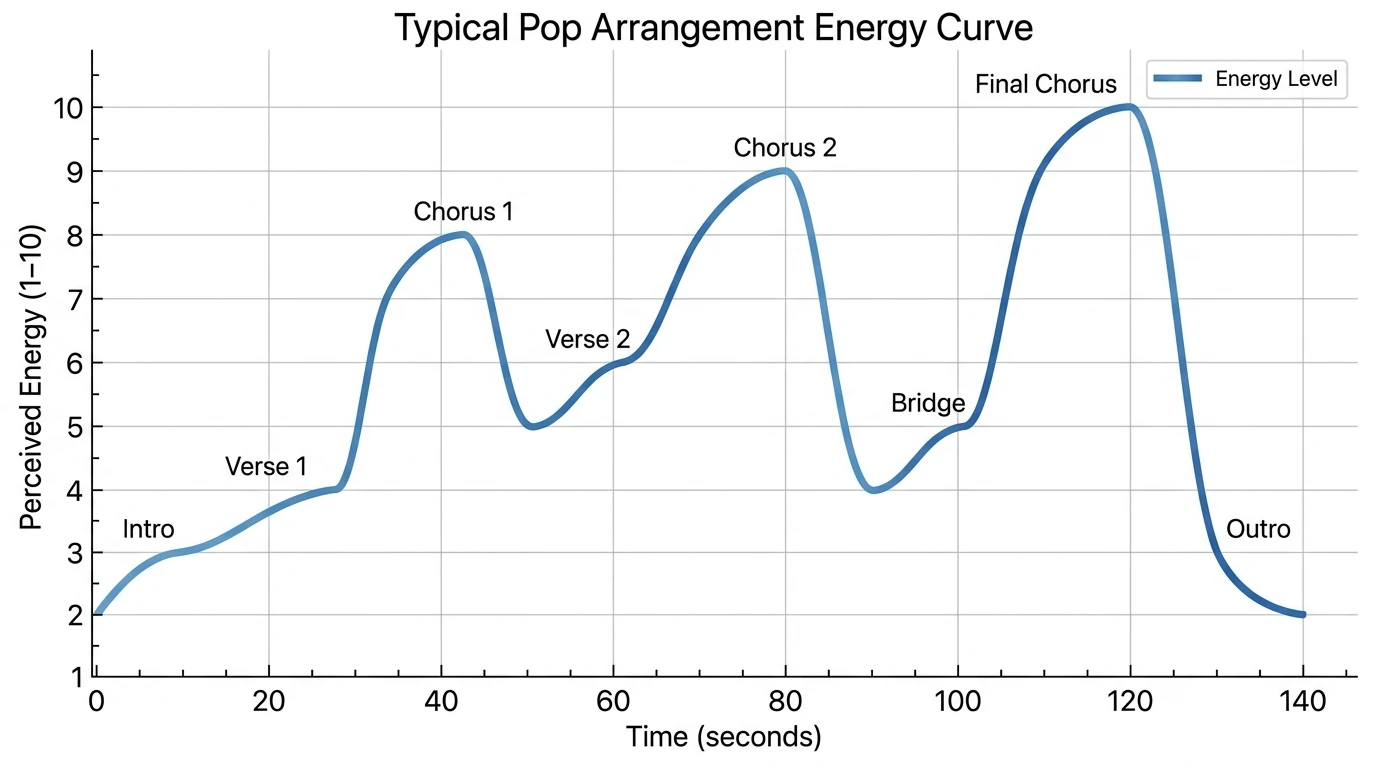
Arrangement is where a "song" becomes a "record." The goal is contrast: fewer elements in verses, more energy in choruses, a twist in the bridge, then a final chorus lift. In my own projects, I often mute one main element in verse one (like the kick) so the first chorus feels like it opens up.
Common arrangement moves:
- Add a new instrument in chorus 2 (strings/pad/synth lead)
- Change drum pattern: hats open, snare layers, extra percussion
- Use a pre-chorus to build tension (rising chords, snare rolls)
This sequencing matches standard production stages (songwriting -> arrangement -> recording -> mixing -> mastering), and it's worth treating arrangement as its own skill: Music production secrets (Arrangement).
Step 9: Record (Or Generate) the Parts Cleanly
Recording is capturing performance. If you record vocals/instruments, prioritize clean takes and stable levels over fancy plugins. If you're producing in-the-box, prioritize good sound sources (samples, synth presets, or generated stems) before mixing.
A simple recording checklist:
- Avoid clipping; leave headroom
- Record multiple takes (comp later)
- Label tracks clearly (Vox Lead, Vox Doubles, Kick, Snare, etc.)
Disc Makers has a clear overview of the full production chain: Recording, Mixing, and Mastering Process.
Step 10: Mix and Master (So It Translates Everywhere)
Mixing is balance and clarity; mastering is final polish and loudness management for release. A beginner mistake is trying to master a messy mix - fix the mix first. Leave headroom (many engineers aim around -6 dBFS peak headroom before mastering) and avoid crushing dynamics too early.
Quick mix priorities (in order):
- Volume balance (faders)
- Clean-up EQ (remove mud/harshness)
- Compression for control (not punishment)
- Space (reverb/delay) and width
- Automation (make sections feel alive)
When You Want to Make a Song Faster: Use MuseGen (AI-Assisted Workflow)
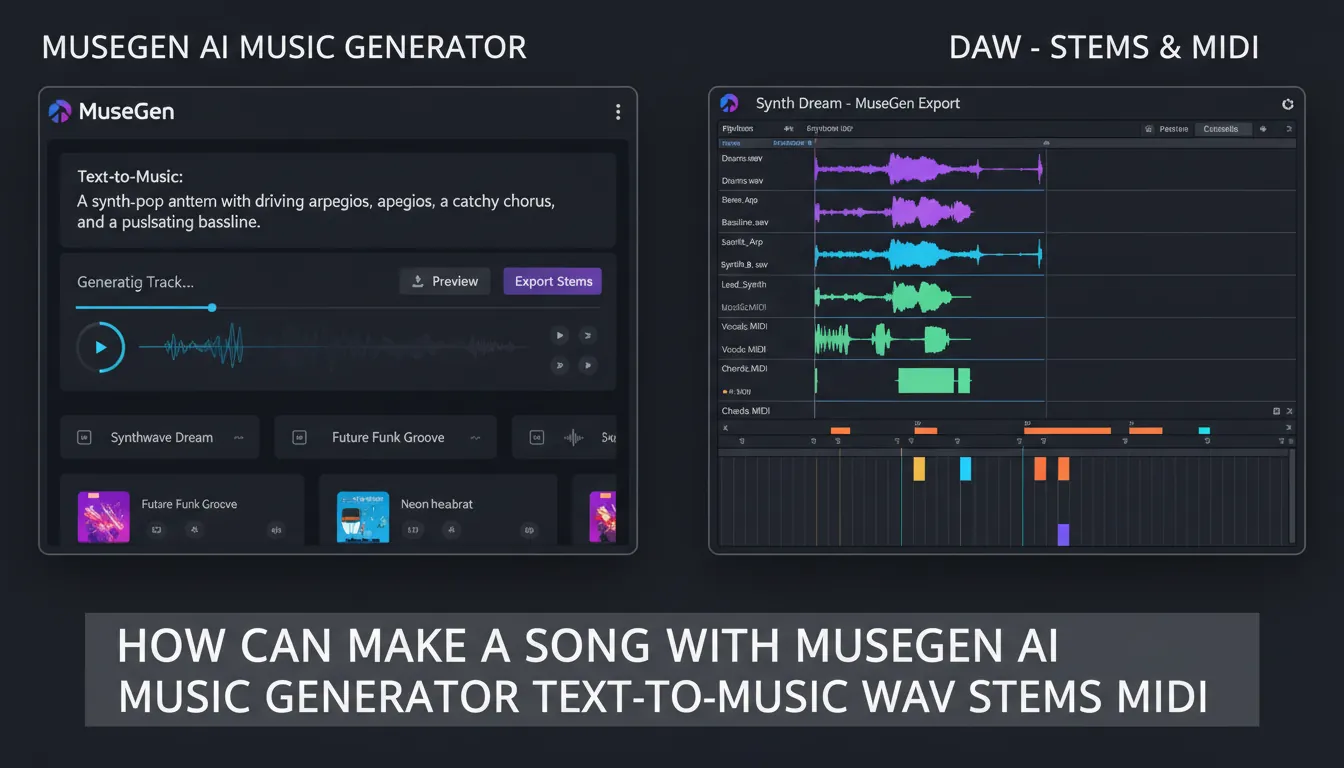
Sometimes your biggest blocker is "I can't get from idea to demo." MuseGen is built for that moment: you can generate original music from text, lyrics, audio, or even images - then export stems/MIDI to finish in your DAW. I've used AI generators when a client needed multiple variations fast (different moods/cut-downs), and the time savings comes from getting usable structure + instrumentation instantly.
Where MuseGen fits best:
- Turning a rough concept into a full demo in minutes
- Generating multiple genre variations to audition a direction
- Exporting WAV stems + MIDI for professional refinement
- Building content-ready tracks for creators, games, podcasts, and ads
If you're comparing approaches, this table makes the tradeoffs clear.
| Approach | Best for | Typical time to first demo | Pros | Cons | | ------------------------------ | -------------------------------------------- | -------------------------- | ---------------------------------------------------- | ------------------------------------ | | Traditional (instrument + DAW) | Musicians/producers building signature sound | 2-10 hours | Maximum control, strong skill growth | Slower, easy to get stuck | | Loop/sample-based production | Content creators, beatmakers | 30-180 minutes | Fast, genre-friendly, low theory needed | Can sound generic if overused | | AI-assisted with MuseGen | Beginners to pros needing speed + options | 2-20 minutes | Rapid ideation, stems/MIDI export, style exploration | Needs curation and final human taste |
Quick "Make a Song" Checklist (Print This)
If you only remember one workflow for how can make a song, make it this:
- Title + emotion
- Structure (V-C-V-C-B-C)
- Key + tempo
- 4-chord loop
- Chorus hook (lyric + melody)
- Verse details (advance story)
- Arrangement (contrast)
- Record/generate parts
- Mix (balance -> clarity -> space)
- Master and export
Legal Basics: Copyright and Registration (Simple, Not Scary)
In the U.S., your song is generally protected by copyright once it's created and "fixed" (recorded or written). Registration is optional but powerful if you ever need to enforce your rights. If you plan to release commercially, it's worth learning the basics of registering via the Copyright Office eCO system.
Helpful guides:
FAQ (People Also Ask)
1) How do I create my own song?
Pick a title, choose a simple structure (verse/chorus), loop a 4-chord progression, and write the chorus hook first. Then build verses that explain the story behind the chorus.
2) How can a 12 year old write a song?
Use a short title, write one chorus (2-4 lines), then write two verses that answer "who/what/why." Keep chords simple (even one chord works), and record a phone demo to improve it later.
3) Do I need music theory to make a song?
No. Theory helps you name what you hear and make choices faster, but many great songs start from emotion, rhythm, and repetition - not complex harmony.
4) How did Jim Morrison write songs?
Many writers in that style start with poetry-like lyric drafts, then shape them into sections that fit melody and rhythm. The key is editing: turning free writing into singable lines with a clear hook.
5) How to make songs like Steve Lacy?
Focus on clean, simple chord progressions, tight drum breaks, and tasteful effects (like chorus), then layer minimal parts with strong groove. The "small but intentional" production choices matter more than huge track counts.
6) What was John Denver's best song?
That's subjective, but many listeners cite "Take Me Home, Country Roads" as his most iconic. Studying it is useful because the chorus is direct, memorable, and emotionally clear.
7) What songs do 14 year olds like?
Trends change fast, but generally: catchy hooks, relatable lyrics, short runtimes, and strong rhythmic identity. If you're writing for that audience, prioritize chorus impact within the first minute.
Conclusion: Your First Song Just Needs to Exist
At the end of the day, the best answer to how can make a song is: finish a small version, then improve it. I've watched beginners level up faster by completing 10 "imperfect" songs than by polishing one unfinished idea for months. If you want to speed-run demos, try an AI-assisted workflow like MuseGen - then bring your taste and edits to make it yours.